

The French Video Game Industry in 2027: Trends Worth Watching
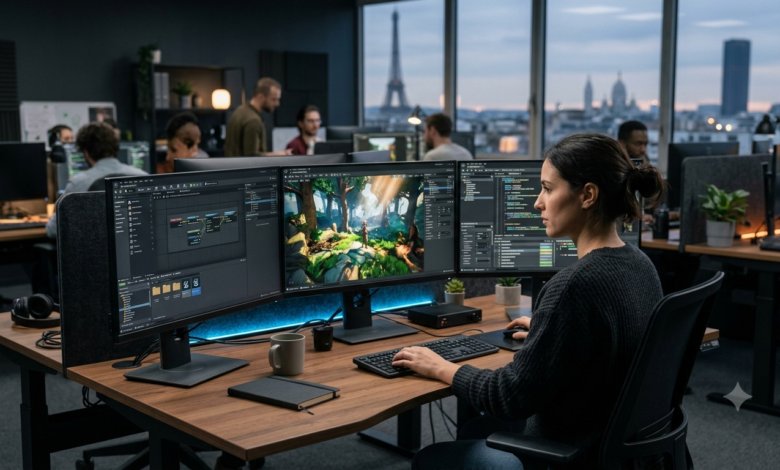
France’s video game industry enters 2027 with significant creative strengths, internationally recognised studios and a growing range of opportunities across console, PC and mobile gaming. However, the sector also faces financial pressure, difficult access to investment and uncertainty over the long-term sustainability of game development.
The latest industry figures underline this contrast. In October 2026, France’s National Centre for Cinema and the Moving Image (CNC) reported that nearly half of the surveyed video game companies were operating at a loss, while many studios continued to depend on public support to finance development. The survey covered 107 qualified game development companies between April and June 2026.
Against this backdrop, several trends could shape the French video game industry in 2027, from independent game development and mobile gaming to artificial intelligence, international competition and government support.
1. Independent Studios Will Remain Central to French Gaming
France has an established ecosystem of independent developers producing games for audiences around the world. These studios often compete through original concepts, distinctive visual styles, creative storytelling and specialised gameplay rather than the enormous budgets available to major publishers.
The country’s development community includes both established businesses and emerging teams. The national industry association, SNJV, reports that France has more than 1,000 video game companies, including nearly 600 development studios. French companies created more than 630 new intellectual properties in 2024, demonstrating the sector’s creative output.
In 2027, independent studios may continue to attract attention by focusing on clearly defined audiences, unusual game mechanics and distinctive artistic identities. Digital distribution also gives smaller developers access to international players without requiring a traditional physical retail release.
However, creative potential does not guarantee commercial success. The CNC’s latest barometer indicates that the French industry remains fragmented, with many businesses working on a single game at a time and a substantial proportion generating less than €300,000 in annual revenue.
For independent developers, financial planning, realistic production schedules and early audience testing will therefore remain as important as the creative idea itself.
2. Mobile Gaming Could Offer More Room for Growth
Mobile gaming is another important trend to watch. Smartphones provide developers with access to large audiences, while free-to-play models, in-app purchases and advertising create several potential routes to monetisation.
France’s domestic gaming market has already shown the importance of mobile. According to the French video game publishers’ association, SELL, mobile gaming revenue increased by 11% in 2025, while the overall French video game market reached €5.856 billion, its second-highest level on record.
Despite this opportunity, the CNC’s October 2026 barometer found that mobile remains less explored by French development companies than might be expected given the segment’s international growth.
This gap could create opportunities for studios willing to develop mobile-first projects or adapt existing intellectual property for smartphones.
Success will depend on more than simply releasing a game on mobile platforms. Developers need to consider user acquisition costs, player retention, monetisation design, accessibility and competition for attention. Smaller French studios may need partnerships with experienced publishers or mobile specialists to compete effectively.
3. Artificial Intelligence Will Change Development Workflows
Artificial intelligence is likely to remain one of the most closely watched technologies in game development during 2027. AI-assisted tools can help teams generate early concepts, test dialogue, prototype environments, automate selected quality-assurance tasks and accelerate certain repetitive production processes.
For French studios operating with limited budgets, these tools may offer ways to improve productivity or test more ideas before committing to expensive production work.
Nevertheless, AI is unlikely to remove the need for skilled developers, artists, writers, designers and technical specialists. Games still require coherent creative direction, careful balancing, performance optimisation and quality control. AI-generated assets may also introduce additional work when they lack consistency or fail to meet a project’s requirements.
Studios will need clear policies for intellectual property, training-data concerns, confidentiality and disclosure. They should also evaluate whether AI tools genuinely reduce costs without weakening the originality or quality that differentiates their games.
Employment is another important consideration. France Travail reported in September 2026 that women represented 20% of employees in French game production studios in 2024, while women held 14% of leadership positions. The report also highlighted concerns about changing entry-level opportunities as generative AI affects some art and design tasks.
In 2027, the most successful studios may be those that use AI selectively while continuing to invest in human expertise, diverse teams and sustainable career development.
4. Console and PC Gaming Will Continue to Compete for Attention
Console and PC gaming remain major pillars of the French market, but their commercial performance can vary depending on hardware cycles, major releases, pricing and consumer spending.
SELL’s 2025 market figures showed a 14% increase in console sales by value, alongside continued growth in mobile gaming. This followed a more difficult 2024, when the overall market declined from an unusually strong previous year.
For 2027, several factors could influence console and PC gaming:
-
Major game releases: Highly anticipated titles can encourage players to purchase new hardware, upgrade existing systems or spend more on games.
-
Subscription services: Game catalogues and recurring subscriptions may influence how consumers discover and access new titles.
-
PC hardware costs: Graphics cards, memory, processors and other components affect the affordability of gaming PCs.
-
Cross-platform releases: Launching on multiple platforms can expand a game’s potential audience, although optimisation and certification can increase development costs.
French studios will need to evaluate platform choices carefully. A console-first strategy may suit certain action or narrative games, while PC releases may provide a practical route to specialised communities and early player feedback. The best platform strategy will depend on the game’s audience, development budget and commercial model.
5. French Game Franchises and Original Intellectual Property Will Matter
Original intellectual property is a long-term asset for developers and publishers. A successful franchise can generate revenue from sequels, downloadable content, merchandise, adaptations and licensing agreements.
French studios have demonstrated their ability to develop internationally recognised games. The CNC’s Game France initiative highlights a range of French-developed titles, from independent productions to projects associated with larger studios. The initiative also helps connect French businesses with international partners and showcases games at industry events.
In 2027, publishers may continue to balance established franchises with new intellectual property. Recognisable brands can help attract audiences, but they also carry expectations around quality and innovation. Original games offer creative freedom, although they may require greater investment in marketing and audience development.
For smaller studios, building a recognisable identity around a particular genre, art style or gameplay experience can be a useful alternative to competing directly with blockbuster productions.
6. Funding and Public Support Will Remain Important
Financing is one of the biggest challenges facing the French video game industry. Development can require years of work before a studio receives meaningful revenue, leaving businesses exposed to changing investor sentiment, delays and cost overruns.
The CNC’s October 2026 barometer described a difficult financing environment, with increased reliance on public support and nearly half of surveyed companies reporting losses. It also found that the Video Game Tax Credit, known in France as the Crédit d’impôt jeu vidéo (CIJV), was being used by half of the surveyed businesses, compared with 20% in 2019.
France offers several forms of support, including the video game tax credit and the Video Game Support Fund (Fonds d’aide au jeu vidéo, or FAJV). The tax credit can cover 30% of eligible development expenditure, subject to applicable conditions and a maximum of €6 million per company per fiscal year. Qualifying projects must meet criteria including a minimum development cost of €100,000 and cultural requirements.
These schemes can help eligible studios manage production costs, but they are not a guarantee of profitability. Businesses must understand the eligibility rules, application process, timing and documentation requirements before incorporating support into a financial plan.
In 2027, access to private investment, publisher advances, co-production agreements and public schemes may remain decisive factors in determining which projects reach completion.
7. International Partnerships Could Expand the Market
France’s video game industry operates within a global market. Developers may find audiences across Europe, North America and Asia, while publishers and investors can provide the resources needed to bring projects to a wider audience.
International partnerships can support distribution, localisation, marketing, co-development and access to additional production expertise. For independent studios, working with a publisher may reduce some commercial barriers, although the terms of any agreement need careful review.
The CNC’s Game France initiative explicitly promotes international connections and helps present French-developed games to industry stakeholders abroad.
During 2027, studios may increasingly consider international reach from the earliest stages of development. That means planning for translation, cultural adaptation, accessibility, regional pricing and customer support rather than treating localisation as a final step.
International expansion also creates challenges. A game that succeeds in France may need different marketing, community management or monetisation approaches in another market. Developers must assess demand and distribution costs before committing substantial resources.
8. Regional Game Development Hubs Will Continue to Matter
Paris is an important centre for the French video game industry, but development activity extends well beyond the capital. Regional ecosystems help connect studios with universities, specialist training programmes, technology companies, creative communities and local support organisations.
According to SNJV, more than half of French video game companies are located outside the Paris region, with significant activity in cities and regions including Bordeaux, Lille, Lyon and Montpellier.
These regional hubs can offer studios access to talent and collaborative networks without requiring every business to be based in Paris. They may also support local employment and encourage graduates to build careers closer to home.
For 2027, regional collaboration could be particularly valuable for smaller developers seeking shared expertise, recruitment networks, business mentoring and access to public or private financing. The availability of suitable talent, funding and infrastructure will nevertheless vary from one region to another.
9. Talent, Recruitment and Inclusion Will Be Key Industry Issues
Video game development requires a broad mix of skills, including programming, game design, animation, audio production, user research, marketing, project management and community engagement.
Recruitment has become more complicated in a sector facing financial pressure. Studios may need to keep teams lean, postpone hiring or rely on contractors. At the same time, experienced specialists can be expensive, and projects may require skills that are difficult to source locally.
The gender imbalance in the industry is another issue to watch. France Travail’s September 2026 report, drawing on 2024 figures, found that women accounted for 20% of employees in French production studios and 14% of leadership positions.
Improving access to technical careers, making recruitment practices more inclusive and supporting career progression could help studios broaden their talent pool. Training also needs to adapt to changes in AI, real-time graphics, online services and cross-platform development.
For employers, a sustainable workforce is not simply a recruitment issue. It also involves manageable production schedules, effective leadership, clear career paths and working environments that help retain experienced staff.
10. Sustainability and Responsible Production May Gain More Attention
Environmental and social responsibility is becoming increasingly relevant across creative industries, including video games. Development studios use computing infrastructure, office equipment and cloud services, while online games can require ongoing server capacity and frequent updates.
The CNC’s October 2026 industry barometer found that half of the surveyed companies had already completed carbon assessments. The report also identified ongoing efforts around corporate social responsibility, although progress varies across businesses.
Responsible production also includes accessibility, player wellbeing, data protection and safe online communities. These considerations can influence a game’s design and reputation, especially when developers target younger audiences or operate live-service products.
For smaller studios, the practical approach is likely to be incremental: identify the most significant impacts, prioritise achievable improvements and build responsible practices into production planning rather than treating them as separate initiatives.
What Could Hold the French Video Game Industry Back in 2027?
Despite its creative strengths, the French industry faces several risks that could limit growth:
-
Financial instability: Smaller studios may struggle to cover development costs before a game generates revenue.
-
Uncertain consumer spending: Players may delay hardware purchases or reduce spending on premium games and optional content.
-
Intense international competition: French developers compete with studios worldwide for players, investment, publishing deals and experienced employees.
-
Production delays: Longer development cycles and rising costs can place pressure on already limited budgets.
-
Changing technology: AI tools, new hardware and evolving distribution models require businesses to adapt without overextending their resources.
The CNC’s October 2026 findings suggest that the industry should not be judged on creative output alone. Financial resilience and access to sustainable funding will be just as important as the ability to produce innovative games.
The French video game industry in 2027 is likely to be shaped by a combination of creative ambition and financial discipline. Independent studios, mobile gaming, AI-assisted production, international partnerships and original intellectual property all offer potential opportunities.
France also benefits from an established development ecosystem, regional talent hubs and public support mechanisms. However, the latest industry data highlights real challenges, particularly for smaller companies operating with limited financial resources.
The studios best positioned to succeed may be those that understand their audiences, manage production costs carefully, use new technologies responsibly and build realistic plans for reaching international markets. Rather than relying on one major trend, the industry’s long-term performance will depend on how effectively it combines creativity with sustainable business models.
Frequently Asked Questions
1. Is France an important country for video game development?
Yes. France has a substantial development ecosystem, with more than 1,000 video game companies and nearly 600 development studios reported by SNJV. French studios work across independent, PC, console and mobile games.
Key trends include independent game development, mobile gaming, AI-assisted production, original intellectual property, international publishing partnerships and the search for more sustainable funding.
3. Does France provide financial support to game developers?
Yes. Eligible developers may be able to access the Video Game Tax Credit and the CNC’s Video Game Support Fund. Eligibility criteria apply, so studios should consult the official programme guidance before relying on this support.
AI is more likely to change individual tasks and production workflows than eliminate the need for complete development teams. Its impact will vary by role, studio and project. Creative direction, technical integration, testing and quality assurance will remain important.
5. What challenges will French game studios face in 2027?
Major challenges include securing financing, controlling production costs, finding and retaining skilled employees, competing internationally and building a commercially sustainable audience.
